TGTGInsighttelegram intelligenceLIVE / telegram public index
TGINSIGHT CHAT
Devils Below
@devilsbelow
EconomicsAnalysis, daily updates on exploitation of Africa’s mineral wealth. 👀 Money flows, bribes, pollution - keeping you aware of what you would otherwise overlook.
Recent posts
Recent posts
Page 18 of 43 · 505 posts
Posted Dec 17
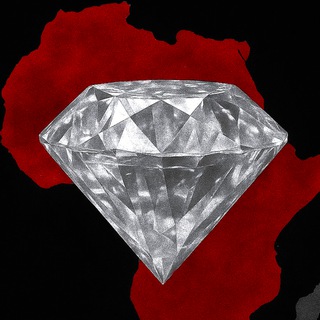
All Guts, No Brains 💎 Botswana intends to buy a diamond giant despite having no money and IMF alarms 🌐Botswana's president Duma Boko reaffirmed the intention to buy thedying diamond major De Beers. In early December, the International Monetary Fund (IMF) recommended that Botswana abandon the purchase in the face of budget deficits and the dubious future of natural diamonds. 🏷 De Beers is a once-great diamond company that held a global monopoly over the diamond trade in the mid-20th century. De Beers’ main trump cards were its control over diamond trading networks and marketing — its slogan “A Diamond is Forever” became one of the most famous slogans in the world. 🔴 Since the early 21th century, the company has been in crisis due to the loss of its trading monopoly and the rise of lab-grown diamonds. Today the current owner, Anglo American Plc, wants to sell its 85% stake, while Botswana has long declared its desire to acquire the majority share. The price tag is $4.1 billion. 🇧🇼 For once, the IMF offered good advice — but Botswana’s Duma Boko apparently didn’t need it. Despite shrinking diamond revenues and falling demand, the president believes he can make both diamonds and Botswana great again through better marketing. “Diamonds are not selling due to the process being used, and we have to overhaul it,” he said. ⏩ Boko may well portray the potential acquisition as restoration of Botswana's control over its diamonds, but in reality the state is simply going to waste an amount equivalent to 73% of its annual revenue (which was $5.6 billion in 2024) to buy a hopeless asset. ➡️ Follow to stay informed - @devilsbelow
126 views
Posted Dec 17
A Three-Kilometer-Long Train ⚙️ A train of 200 cars, stretching 2.5–3 kilometers in length, is one of Mauritania’slandmarks. It's habitat is a 700-kilometer route between the iron ore mines of Zouerate and the port of Nouadhibou on the Atlantic coast. 📉 The mining industry, including the iron mines of Zouerate, accounts for up to 25% of the country’s entire economy. In a certain sense, the ore-carrying train is a legacy of an aging economic model centered on raw exports. 📈On the other hand, as long as the locomotives keep going from the mines to the sea and back, they attract tourists, while locals hop on the train to travel and shoot TikToks — a interesting example of how modern economy can develop around an old industry. ➡️ Follow to stay informed - @devilsbelow
121 views
Posted Dec 17
117 views
Posted Dec 17
🏜 When the way is far and the line is single-track, it is reasonable to use the longest possible train. Considerations like this gave birth to this iron resemblance of a shai-hulud, crawling across the desert to the ocean. ➡️ Follow to stay informed - @devilsbelow
125 views
Posted Dec 16
Broke Up, But Not For Long 🤡 Guinea wants to supply ore to a company whose mine it nationalized 🌐 Insiders say that the Guinean government is in talks for state-owned Nimba Mining to supply bauxite to a plant of the Emirati company EGA. 🔨 The nuance here is that Nimba Mining is an asset taken from EGA itself back in July. The company failed to meet its deadline to build an aluminium smelter in Guinea, so the government decided that its bauxite mining project merits being taken away. ⏩ After that, Guinea and the company found themselves in the position of divorced spouses. Guinea had nowhere to send bauxites, while EGA could not find feedstock for its plant in the UAE (it did not build a smelter in Guinea, but somehow managed to build one at home). In the end, everything is returning to the status quo, except that Guinea now holds the mining asset. ⏩ Guinea has been consistently pushing for local processing. All bauxite miners are required to begin construction of plantsby 2027 – in case of non-compliance, they can apparently also expect to part ways with their mines. The only question is whether the government itself will invest competently in processing. ➡️ Follow to stay informed - @devilsbelow
121 views
Posted Dec 16
Mozambique-Australia Chicken Game 🌟 Australian company South32is threatening to shut down by March 2026 one of the largest aluminium smelters on the entire continent, located in Mozambique near Maputo. This is part of a long-running tug-of-war between Mozambique's government and the company. South32 owns a 63.7% stake in Mozal Aluminium, the largest industrial enterprise in Mozambique. According to media reports, this single plant generates up to 3% of Mozambique’s GDP while consuming up to 50% of all the electricity produced in the country. Its nameplate capacity is >550,000 tonnes of aluminium per year. 📆 In earlier times, Mozambique’s government was generous in handing out preferential terms for investment. The Mozal plant was one of the beneficiaries: since 1997 it has paid no income tax, only 1% of turnover + dividends. 🔄 More recently, however, the policy has U-turned towards revising such contracts in order to squeeze more tax out of companies. One problem is that Mozal’s preferential contract runs until 2047. 💡 So, another pretext was found — the upcoming review of electricity prices, especially given that the power supply contract has to be renegotiated by March 2026. Assuming the smelter would have no choice, the government set a higher tariff and simply waited for day X. 🤔 However, at the Australian company’s office they realised that escalation can work both ways, and in turn announced they will simply halt production, which could lead to several thousands of people losing their jobs. ⏩This is the curse of industrialization: with no domestic capital one has no choice but to lure foreign investors with lower taxes — and afterwards put up with absent revenues. ➡️ Follow to stay informed - @devilsbelow
131 views
Posted Dec 16
Talk Left, Walk Right in South Africa🇿🇦 For Pretoria, accusing Israel of genocide is not an obstacle to increasingcoal supplies 🌐 South Africa, one of the fiercest critics of Israel’s actions in Gaza,has nearly doubled its coal exports to the Jewish state. The opportunity to send extra volumes opened up when Colombia, an active critic of Israel's actions in Gaza itself, banned its coal shipments to Israel. 🔨South Africa and Colombia have much in common. When South Africa was the first to file a complaint with the UN International Court of Justice in December 2023, accusing Israel of failing to prevent genocide in Gaza, Colombia was among the first countries who joined the initiative. At the same time, Colombia was Israel’s main coal supplier, while South Africa was in the top-3. 👋 However, the two countries diverged when it came to real action. In August 2024 Colombia (source of about 41% of Israel’s coal), banned exports and by September 2025 shipments had dropped to zero. South Africa, by contrast, imposed no such ban and its sales instead grew by 87% after Colombia’s shipments stopped. ⏩ Coal is not Israel’s main energy source — it generates some 10% of electricity today, and this share is declining. Even so, it is ironic to see that Colombia has ended up more concerned about the fate of Gazans than South Africa, a country that went through apartheid. ➡️ Follow to stay informed - @devilsbelow
105 views
Posted Dec 16
Giant Evictions, Giant Profits 📄 The UK OECD bodyhas found the complaint by residents of eastern DRC over forced evictions to be well-founded and worthy of examination. The case concerns British company AngloGold Ashanti which, together with the notorious Barrick, owns the Kibali gold mine, one of the largest of its kind in Africa, in the northeast of Congo. 📍 Local residents first became an obstacle to gold mining as early as 2010, a year after the complex was launched. After the initial resettlements in 2010–2015, a cordon of so-called Exclusion Zones was drawn on the map around the complex. Living there was formally prohibited, even though the already existing settlements were also included into the zones. 🚧 At the same time, no significant work was carried out there and the zones were not fenced off – so, people who didn't spend their evenings reading municipal cadastral planscould not even have the idea that living there was forbidden. ⚠️ The turning point was reached in 2021, when the discovery of new deposits prompted the project expansion. "Waste dumps" needed to be created on the sites of the Exclusion Zones, and residents who still remained there began to be pushed out, while their houses were demolished. For locals this came as a surprise – far from everyone knew that their homes was part of some kind of special area. 🏘 The escalation turned into violent protests in the nearby town of Durba. On 22 October 2021 3 people were shot dead and 14 wounded by local security forces — which led to the suspension of resettlements. However, most houses had already been demolished by then, amounting to a total number of around 2,360 removed households. ⚖️ Since then, activists have been trying to achieve justice through local courts and foreign institutions. The initial attempt to go to court in Kinshasa went nowhere – the court ruled that the residents had not made sufficient efforts to resolve the dispute through dialogue with the miners. After that, activists lodged complaints with the non-judicial OECD mechanisms in Canada and the UK. ⏩ Unfortunately, their mandates only allow them to issue recommendations, which is what the Canadian body has already done and what the UK one is likely to do as well, despite having accepted the claims as well-founded. #CostOfGreed ➡️ Follow to stay informed - @devilsbelow
124 views
Hashtags
Posted Dec 15
🌐 Weekly News Digest on Africa’s Mineral Industries [ December 8 – December 14 ] This was a week of gas and American economic inroads. 💡Here are the key highlights: 🇧🇯🇹🇬🇨🇮 Benin, Togo & Côte d'Ivoire - Benin, Togo and Côte d’Ivoire create a regional gas alliance 🇨🇩 DR Congo - Congolese miners complain about the requirement to pre-pay cobalt royalties 🇬🇭 Ghana - Chinese ambassador calls on Ghana to take the problem of illegal gold mining seriously 🇱🇷 Liberia - US lawmakers accuse the State Department of advancing China’s economic agenda in Liberia - The parliament endorses granting access to the Yekepa–Buchanan railway to the US company Ivanhoe Atlantic 🇲🇱 Mali - Mali returns $400 million worth of gold to a Canadian company 🇳🇦 Namibia - TotalEnergies has taken control of the largest oilfield in Namibia 🇳🇪 Niger - Niger signed a memorandum with a Russian company on uranium 🇳🇬 Nigeria - Nigeria reduces fees for oil licenses - Nigeria issues permits to 28 companies to access and sell associated gas 🇸🇳 Senegal - Senegal’s minister of energy declared plans to nationalise the Yakaar-Teranga gas field (subsequently refuted) - Emirati companies get access to key resource sectors of Senegal 🇸🇱 Sierra Leone - Two teenagers die in a mine collapse 🇿🇦 South Africa - South Africa's chrome manufacturers get preferential electricity tariffs and avoid closures 🇸🇩 Sudan - The RSF takes over the Heglig oilfield only to transfer it to the South Sudanese army 🇹🇿 Tanzania - Tanzania’s president reassured the US ambassador of full commitment to cooperation with American investors 🇿🇲 Zambia - The US promises Zambia financial support in exchange for reforms and “collaboration in the mining sector” 🇿🇼 Zimbabwe - The president unexpectedly replaces mines minister with his deputy #NewsDigest Devils Below
140 views
Posted Dec 15
ResourcesandNation-Building 🚩 Somaliland plans to start selling its resources abroad by 2027 🌐 Somaliland President Abdirahman Mohamed Abdullahi “Irro” saysSomaliland expects oil and mineralexploration to start by 2027. 🔸 Trying to attract foreigners to extract natural resources is a traditional pastime in parts of what used to be Somalia: amid constant conflict and devastation, selling resources abroad is the easiest way to make money and gain an advantage over one's opponents. 🤔Foreigners, however, are not fools either. Since extracting anything onshore is extremely difficult due to elastic borders and political chaos, their favourite choice is offshore oil production – and here the Mogadishu government, together with Turkey, has had particular success. ⏩Somaliland, for its part, is still content with cooperation with small companies from the UAE and the UK. By launching new extraction projects, Somaliland hopes to secure not only income but also international recognition. ➡️ Follow to stay informed - @devilsbelow
108 views
Posted Dec 15
Did School Teach Them Nothing?🇬🇭 Most children who drop out of school in Ghana do so for illegal gold mining or betting 📖70% of children who drop out of school in Ghana end up in either casinos or gold mines, a new survey suggests. The older the teenager, the more likely they are to abandon boring lessons in favour of blowing money or digging in the ground. 💧 In the end, children lose the already humble sums they have or expose themselves to lethal risks in the mines, polluting rivers and soil with mercury and lead. 🔸 At the same time, it would be wrong to blamegambling and gold alone for the dropouts. The choice in favour of what children see as quick-earning paths is driven by a perceivedlack of opportunities for successful development and income within the normal economy – and this can only be addressed by boosting overall standards of life. ➡️ Follow to stay informed - @devilsbelow
95 views
Posted Dec 15
Battle for Nigeria’s Market Africa’s richest man mounts offensive against state officials overfuel policies Africa’s richest man and Nigeria’s oil magnateAliko Dangote usually keeps out of politics and relatively rarely comments on current affairs, with one exception – when it comes to his main brainchild and legacy: his fuel business in Nigeria. 🌐 One such case was yesterday, 14 December, when Dangote accused Farouk Ahmed, the head of the Nigerian agency that oversees the supply and sale of refined fuel, of corruption. 🏷 Aliko Dangote is Africa's wealthiest man and Nigeria’s industrialist and the founder of the Dangote Group, a conglomerate built around cement, sugar, flour, and other manufacturing. His flagship project is Dangote Petroleum Refinery near Lagos, the largest refinery in Africa and the world's largest single-train refinery with 650,000 barrels/day capacity, undergoing expansion to to 1.4 million bpd. ⏩ In essence, the businessman’s main grievance is that the agency doesn't support his view of domestic oil refining and doesn't fight fiercely enough against cheap fuel imports. ⏩ Dangote’s dispute with officials has been going on since last year, but it sharpened in November when Dangote endorsed president Tinubu's idea of an additional 15% duty on imported fuel, yet on the recommendation of Farouk Ahmed among others, the government postponed its introduction. 🔸 The government is now in a tough position: on the one hand, Dangote is de factosteadily lobbying for a nation-scale monopoly for his refinery, but at the same time Nigeria is Africa’s leading crude producer which shamefully cannot get rid of fuel imports from abroad. ➡️ Follow to stay informed - @devilsbelow
95 views